
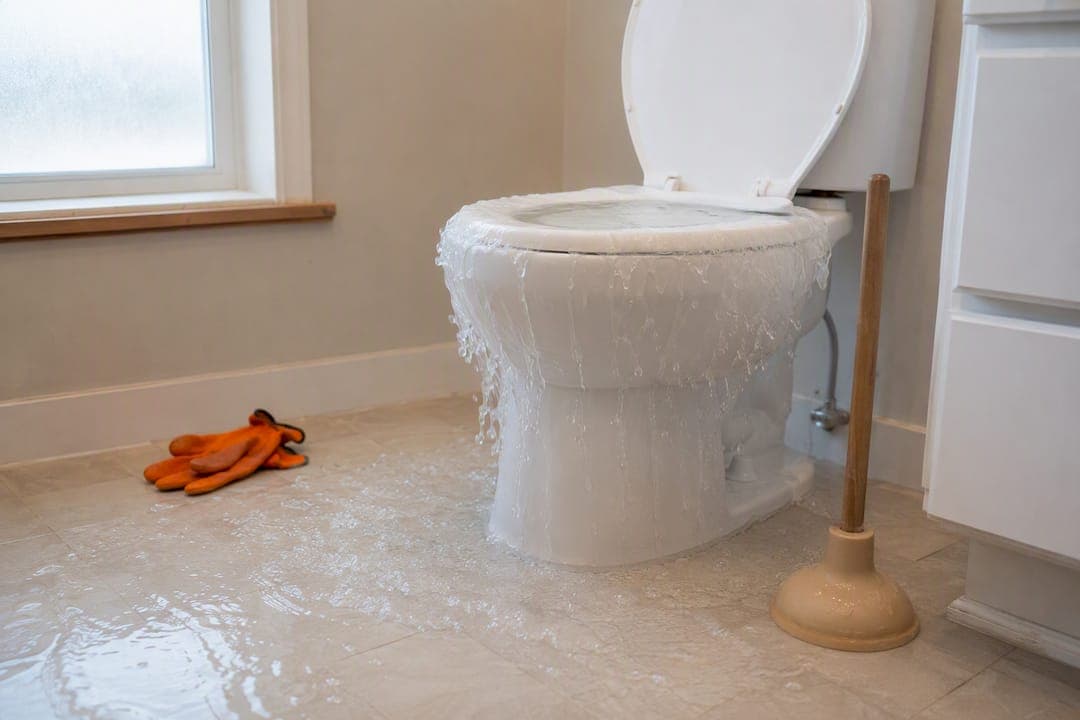
Stop flushing immediately, then lift the flapper inside the tank or shut off the toilet's water supply valve at the wall. Either move cuts off the water that's spilling over the rim. If sewage is backing up or more than one fixture is affected, stop trying to fix it yourself and call a professional right away.
TL;DR:
- Most toilet overflows are caused by drain-line blockages, faulty tank mechanisms, blocked vent stacks, or sewer backups, each requiring different responses.
- If sewage is present in the overflow water, do not use chemical drain cleaners, and always use gloves and eye protection before attempting cleanup.
- Fixing a trap-level clog with a flange plunger may succeed, but larger or main-line backups usually require professional CCTV inspection and jetting services.
- Regular maintenance, including testing shut-off valves, inspecting tank components, and avoiding flushable wipes, significantly reduces the risk of future overflows.
- Emergency services typically respond within 60 to 90 minutes with professional tools, diagnostics, and transparent pricing, especially when multiple drains back up or sewage is involved.
Table of Contents
- What to Do When Your Toilet Overflows: Emergency Steps
- What Causes a Toilet to Overflow? Four Culprits
- How to Fix an Overflowing Toilet Yourself
- When Should You Call a Plumber for an Overflowing Toilet?
- How Can You Prevent Toilet Overflows in the Future?
- Sussex Drain Ltd: What a Professional Overflow Callout Looks Like
- What Homeowners Get Wrong About Toilet Overflows
- Need Emergency Drain Help Right Now?
- Sources
What to Do When Your Toilet Overflows: Emergency Steps
Water rises fast once a toilet overflows, and a single cycle can dump a significant amount of water onto your bathroom floor before you've even grabbed a towel. Speed matters more than technique in the first minute.
- Take off the tank lid carefully and push the rubber flapper down by hand. This seals the tank outlet so no more water feeds into the bowl, buying you time to assess the clog.
- Find the shut-off valve behind or beside the toilet base and turn it clockwise until it stops. If it's seized or won't budge, don't force it. Go back to holding the flapper shut and move to step three.
- Contain what's already on the floor. Old towels work for small spills; a wet/dry vacuum handles larger volumes fast and keeps water from seeping under the vinyl or baseboards.
- Check for sewage. Dark water, a strong odor, or waste from other drains means this isn't a simple overflow anymore.
If sewage is present, put on gloves and eye protection before touching anything. The Illinois Department of Public Health's cleanup guidance warns against reaching for chemical drain cleaners in this situation. They rarely help and can complicate professional remediation later.
Pro Tip: Keep a flange plunger under the bathroom sink year-round. When the tank lid is already off and your hands are wet, the last thing you want is to be hunting through the garage.
What Causes a Toilet to Overflow? Four Culprits
Most overflows trace back to one of four problems, and the symptoms usually tell you which one you're dealing with before you even open the tank. According to The Spruce's breakdown of toilet overflow causes, the root cause is almost always a drain-line blockage, a failed tank mechanism, a blocked vent stack, or a sewer or septic backup.
- Clog in the trap or drain line: only that one toilet is affected. Water rises, drains slowly or not at all, and nothing else in the house acts up.
- Tank or mechanism failure: water keeps running or the bowl fills even without a flush, usually from a stuck float or worn fill valve.
- Blocked vent stack: you'll hear gurgling from the sink or tub when the toilet is flushed, since trapped air is forcing its way out somewhere else.
- Main sewer or septic backup: multiple fixtures back up at once, often with a sewage smell, and it can point to tree roots or a collapsed pipe according to this overview of overflow causes.
The location of the clog is the giveaway here. A trap-level clog only ever bothers the one fixture, while anything further down the line drags other drains into the problem too.
How to Fix an Overflowing Toilet Yourself
Once you've stopped the water, the next question is whether you can clear the clog without calling anyone. For a straightforward trap-level blockage, you often can.
- Grab a flange plunger, not a sink cup plunger. The flange design seats into the toilet's drain opening and creates a real seal, which matters far more than how hard you push. InspectApedia's field guide to toilet overflow emergencies recommends this style specifically for toilets.
- Push down slowly, then pull up sharply, repeating six to eight times before breaking the seal to check the water level. Plunging too aggressively can shove debris deeper into the line or stress the pipe joint instead of clearing it.
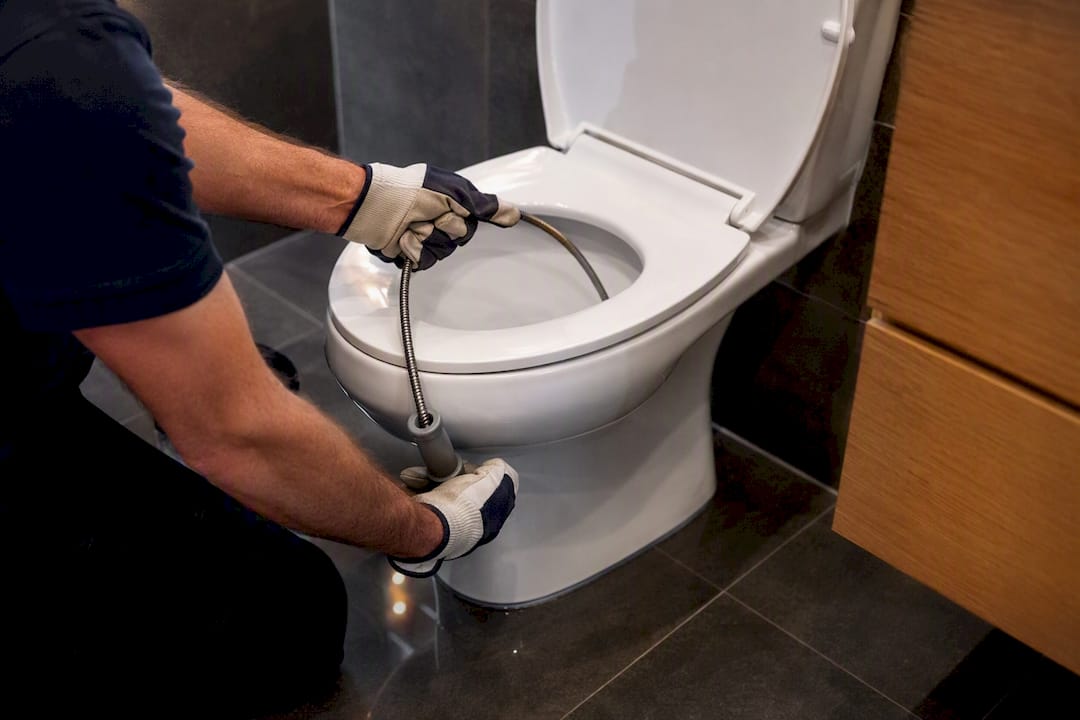
- If plunging doesn't move the clog, switch to a closet auger. Feed the cable in slowly, cranking the handle as it advances, and stop the moment you feel resistance rather than forcing it. Never use a standard drain snake here. It can scratch the porcelain glaze.
- Check the tank mechanics. A misadjusted float, a worn flapper, or a bad fill valve is often the actual problem, and replacing either part usually costs less than a service call according to Korky's toilet repair guidance.korky.com/toilet-repair-help/how-to-stop-toilet-from-overflowing).
- Consider an enzymatic cleaner for paper based clogs only, and give it several hours to work. Skip chemical drain cleaners entirely. They're largely ineffective on toilets and can damage the bowl or pipes, a point Build-Construct's plumbing team backs up.
Pro Tip: Test the bowl water level after every plunge attempt before flushing again. Flushing to "check" if it worked is exactly how a manageable clog turns into a second overflow.
When Should You Call a Plumber for an Overflowing Toilet?
DIY has real limits, and knowing where they sit protects both your bathroom floor and your health.
- More than one fixture is backing up, or you see sewage. This points to a main-line problem no plunger will fix.
- Plunging and augering both fail, or the toilet overflows again shortly after you clear it.
- You suspect tree roots, a collapsed pipe, or septic failure. A camera inspection is usually the fastest way to confirm it before anyone recommends jetting or a repair.
- The shut-off valve is seized shut or a tank part has failed in a way you can't stop by hand.
None of these are situations where renting a bigger tool saves money once you factor in diagnosis time and the risk of making things worse. If you're seeing repeated overflows in the same bathroom, a severely blocked drain often shows other warning signs worth checking before the next flush.
How Can You Prevent Toilet Overflows in the Future?
Most repeat overflows come down to the same handful of habits and worn parts, and fixing them takes less time than one cleanup.
- Flush only toilet paper and human waste. Wipes, sanitary products, and paper towels are the most common cause of trap-level clogs, even when the packaging says "flushable."
- Test your shut-off valve twice a year by turning it fully closed and back open. A valve that's frozen in place is one of the most common reasons homeowners can't stop an overflow fast enough.
- Inspect the flapper and fill valve at the same time, and replace either the moment it looks worn or fails to seal properly.
- If you have mature trees near your main line or a history of recurring clogs, a periodic CCTV inspection catches root intrusion long before it causes a backup.
- On septic systems, plan on pumping every three to five years as a general rule, and keep grease out of every drain in the house, not just the kitchen sink.
Pro Tip: Write the date on a sticky note inside your tank lid every time you test the shut-off valve. Six months goes by faster than you'd think, and this is the one maintenance task everyone forgets.
Sussex Drain Ltd: What a Professional Overflow Callout Looks Like
Sussex Drain Ltd runs a 24/7 emergency line with a 60 to 90 minute response window across East and West Sussex, which matters when a backup is actively spilling onto your floor. Recent work includes a blocked toilet case in Lewes that walks through the exact symptoms and steps a technician followed on site.
A typical emergency visit for an overflow includes:
- CCTV inspection to pinpoint the clog location without guesswork
- High-pressure jetting for stubborn or grease-based blockages
- A powered auger for trap and branch-line clogs that resist manual tools
- Transparent, itemized pricing quoted before any work begins, with no hidden add-ons
This article was written by Nathan, drawing on Sussex Drain Ltd's field experience across hundreds of drainage callouts in the region.
What Homeowners Get Wrong About Toilet Overflows
The conventional advice treats every overflow the same: grab a plunger, hope for the best, call someone if it fails. That misses the more useful question, which is where the clog actually sits. A trap-level blockage and a main-line backup look almost identical for the first thirty seconds, but they call for completely different responses. Plunging a sewer backup wastes time you don't have and can push contaminated water further into your home.
What gets underrated is the tank check. Homeowners fixate on the bowl and forget that a stuck float or dying fill valve causes a huge share of overflows, and that's a five-minute fix with a $15 part, not a plumbing emergency. What gets overrated is chemical drain cleaner. It's the reflex reach for a lot of people, and it does almost nothing for toilets while making the eventual professional job messier.
Prioritize the diagnosis over the panic. Stop the water, look for the pattern, and only then decide whether this is a fifteen minute fix or a phone call.
— Nathan
Need Emergency Drain Help Right Now?
If you've stopped the water and the clog still won't clear, or you're staring at sewage backing up through more than one drain, this is exactly the situation Sussex Drain Ltd handles every week across East and West Sussex. Sussex Drain Ltd gets a technician to your door within 60 to 90 minutes, with itemized pricing quoted on arrival so there's no guessing what the visit will cost before work starts.
A typical emergency call starts with an on-site diagnosis, often backed by a quick CCTV pass if the clog isn't obvious, followed by jetting or augering depending on what's actually blocking the line. For toilets that keep overflowing with no clear cause, a full CCTV drain survey settles the question before it becomes a repeat callout. If you're dealing with an active overflow today, book emergency drain unblocking and get a fixed quote before anyone touches a tool.
Sources
For more on causes and cleanup, see The Spruce's overflow guide and InspectApedia's emergency procedure. Locally, read about preventing blocked drains and when to call for emergency help in Hove.
- Why Is My Toilet Overflowing? (The Spruce)
- Why Your Toilet Overflows: Causes, Fixes, and Prevention (Build-Construct)
- Toilet overflow emergency procedure (InspectApedia)
- Sewer overflow cleanup and safety (Illinois Department of Public Health)